
The James Joyce, Lyon
AI-GENERATED CRITIQUE
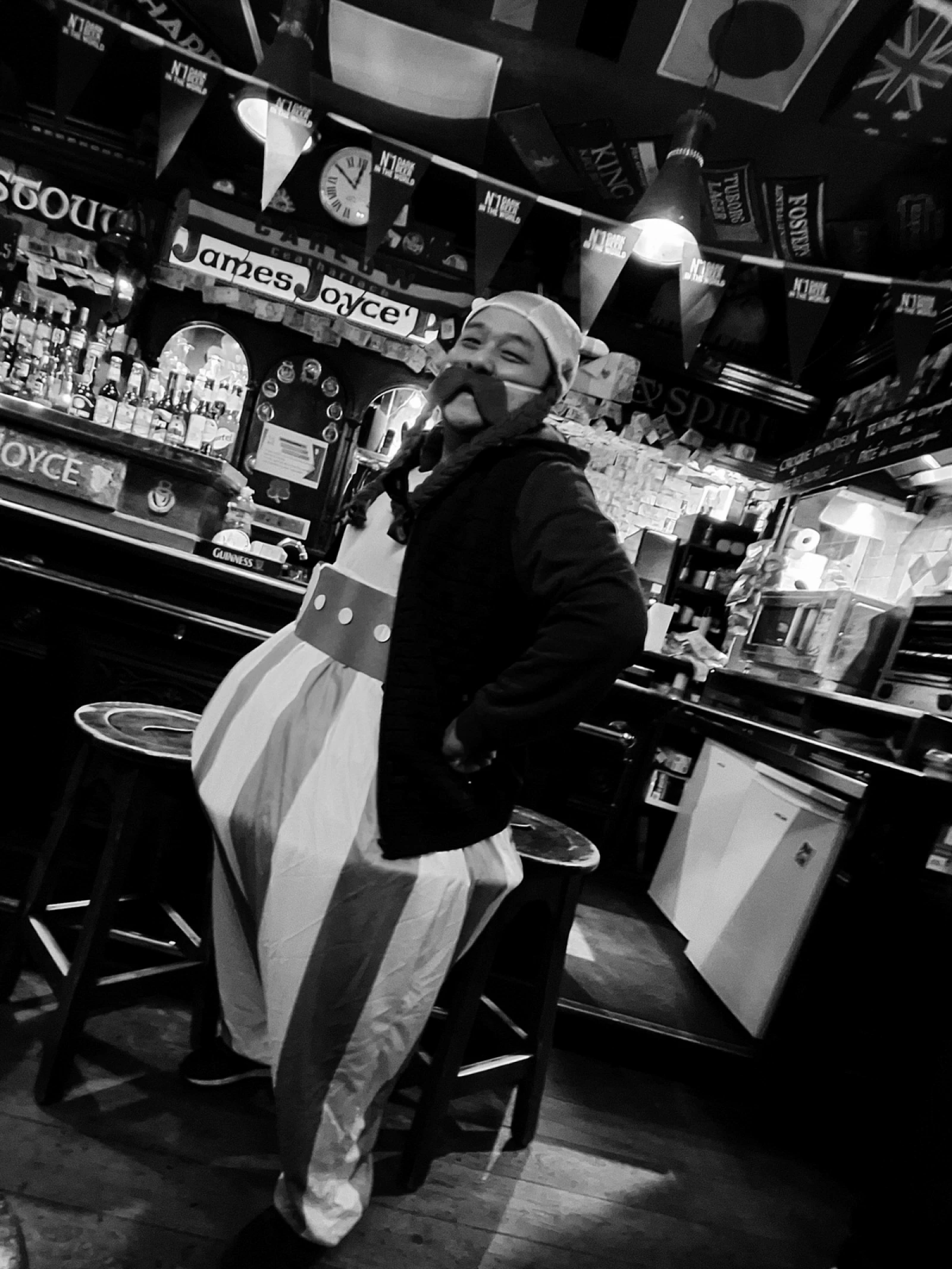
This is a wonderfully theatrical photograph, and the decision to shoot the interior of the James Joyce in stark black and white gives it the feel of a still from a slightly surreal film. The pub itself is already visually dense—the bunting, Guinness mirrors, clocks, bottles, handwritten signs and memorabilia compete for attention—but the figure in the centre transforms all that background clutter into a stage.
What makes the photograph more than a humorous costume shot is the cultural incongruity. A Mongolian visitor dressed as a French comic-book character, photographed in an Irish pub in the heart of Lyon, creates a wonderfully improbable chain of identities: Mongolia, Gaul, Ireland and France all collide within a single frame. The photograph consequently becomes a small record of modern tourism and the strange encounters it produces.
The Dutch angle is particularly effective. The tilted horizon destabilises the scene and reinforces its slightly drunken, festive atmosphere. In another photograph this might seem gratuitous, but here it feels entirely appropriate: the pub appears to lean around the subject, as though the architecture itself has joined the party.
The black-and-white conversion is also a major strength. It strips away the potentially distracting colours of the pub and instead emphasises texture, tonal contrast and atmosphere. The bright costume becomes almost luminous against the black bar, while the highlights on bottles, mirrors and glass create a rich succession of visual fragments.
There is a pleasing tension between order and chaos. The bunting provides diagonal lines across the upper frame; the bar establishes another strong horizontal; the figure then cuts vertically through these structures. The composition consequently has considerable movement. The viewer's eye travels from the illuminated costume to the face, then outward into the clutter of the pub.
The background deserves particular attention. Rather than simply being context, it becomes part of the photograph's narrative. The James Joyce signage and unmistakably Irish pub décor locate the image immediately, while the clocks, mirrors and accumulated memorabilia create the feeling of a place with a long visual memory. The photograph captures something that descriptions of the pub commonly emphasise: its intimate, heavily decorated Irish-pub atmosphere.
Technically, the photograph is deliberately imperfect in an interesting way. Some areas are very dark and others verge on blown highlights, but that contributes to its documentary quality. The image feels observed rather than arranged. A cleaner exposure might actually have diminished its character.
Overall, this is less a photograph of a man in a pub than a photograph about character, atmosphere and coincidence. It has humour without becoming a joke and documentary authenticity without becoming merely observational. The combination of the skewed perspective, high-contrast monochrome and flamboyant central figure gives it the quality of a spontaneous piece of street theatre discovered indoors.