
Haroldswick Longhouse
AI-GENERATED CRITIQUE
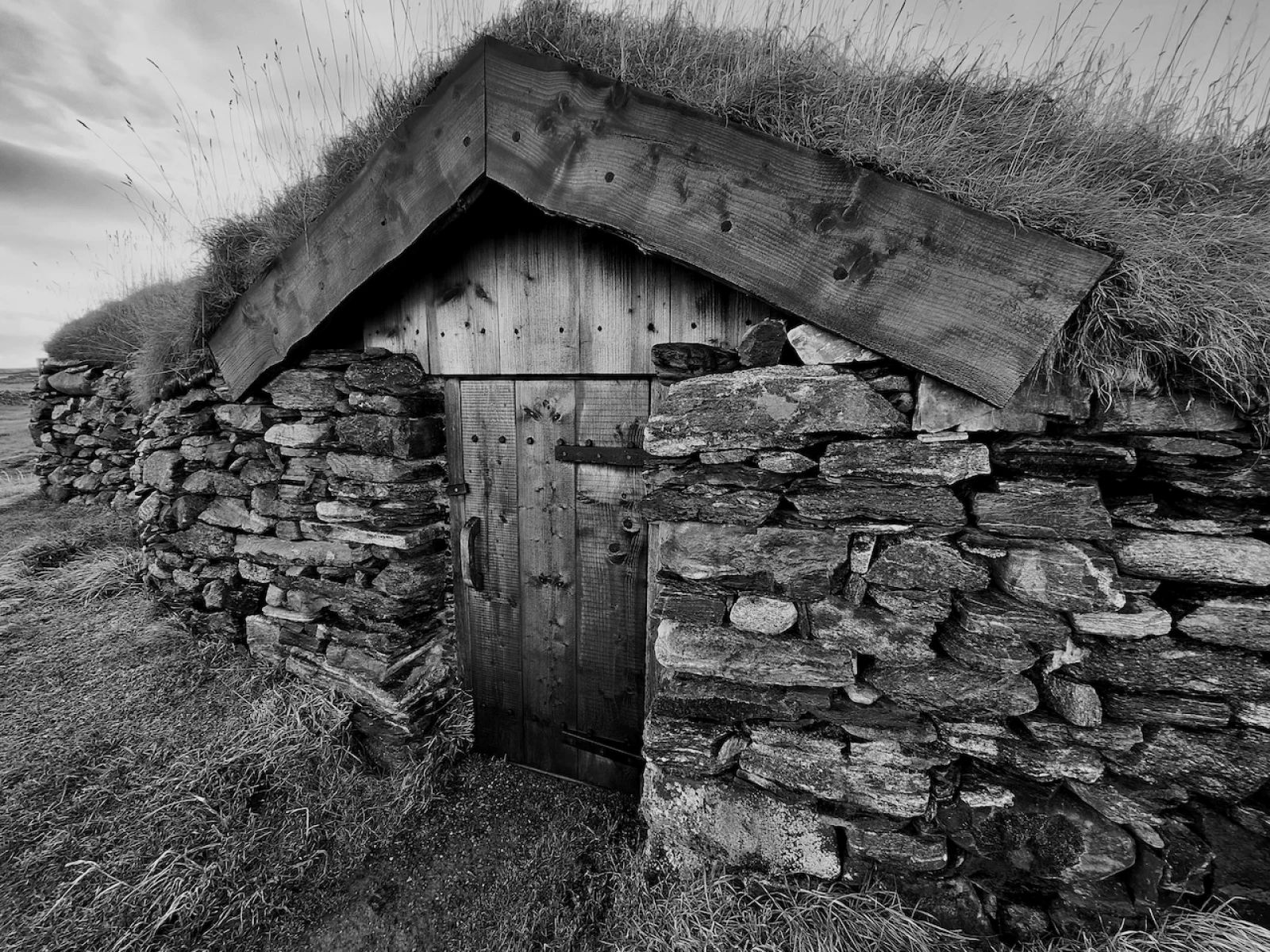
This is a wonderfully tactile photograph, and its greatest strength is the way it makes the hut feel less like a reconstructed historical object and more like something that has grown organically out of the Shetland landscape.
The black-and-white treatment works particularly well. It strips away any distraction of colour and concentrates attention on the extraordinary range of textures: the layered, irregular stones; the weathered grain of the timber; the coarse grass covering the roof; and the muddy, worn ground in front of the doorway. The image almost invites the viewer to reach out and touch it. The wood and stone have a beautifully physical presence.
Compositionally, the low triangular roof creates a strong visual anchor. Its heavy diagonal edges lead the eye towards the small doorway, which becomes the psychological centre of the photograph. There is something slightly mysterious about that door: it is dark, narrow and closed, while the surrounding landscape is open and exposed. The photograph therefore acquires a quiet sense of narrative — who built this, who entered it, and what might be inside?
The grass-covered roof is especially effective. It visually merges the building with the landscape, suggesting a structure that is being slowly reclaimed by the elements. This is very Shetland: architecture and terrain appear almost inseparable. The stonework also has considerable character. Rather than presenting a perfectly constructed wall, the photograph depicts something uneven and handmade, with every stone contributing to the image's sense of age and endurance.
There is also an interesting tension between weight and vulnerability. The walls look almost immovable, while the timber roof appears weather-beaten and precarious. The hut seems simultaneously ancient and temporary — a small human intervention struggling to survive within a much larger landscape.
Overall, this is a strong, atmospheric documentary photograph. It avoids postcard prettiness and instead emphasises material, weather, labour and survival. The hut becomes more than a Viking-themed structure: it feels like a fragment of a much older relationship between people, stone, timber and the unforgiving northern landscape.
The most successful quality is its sense of touch — you can almost feel the cold stone, rough timber and wet grass through the photograph.