
boop!
AI-GENERATED CRITIQUE
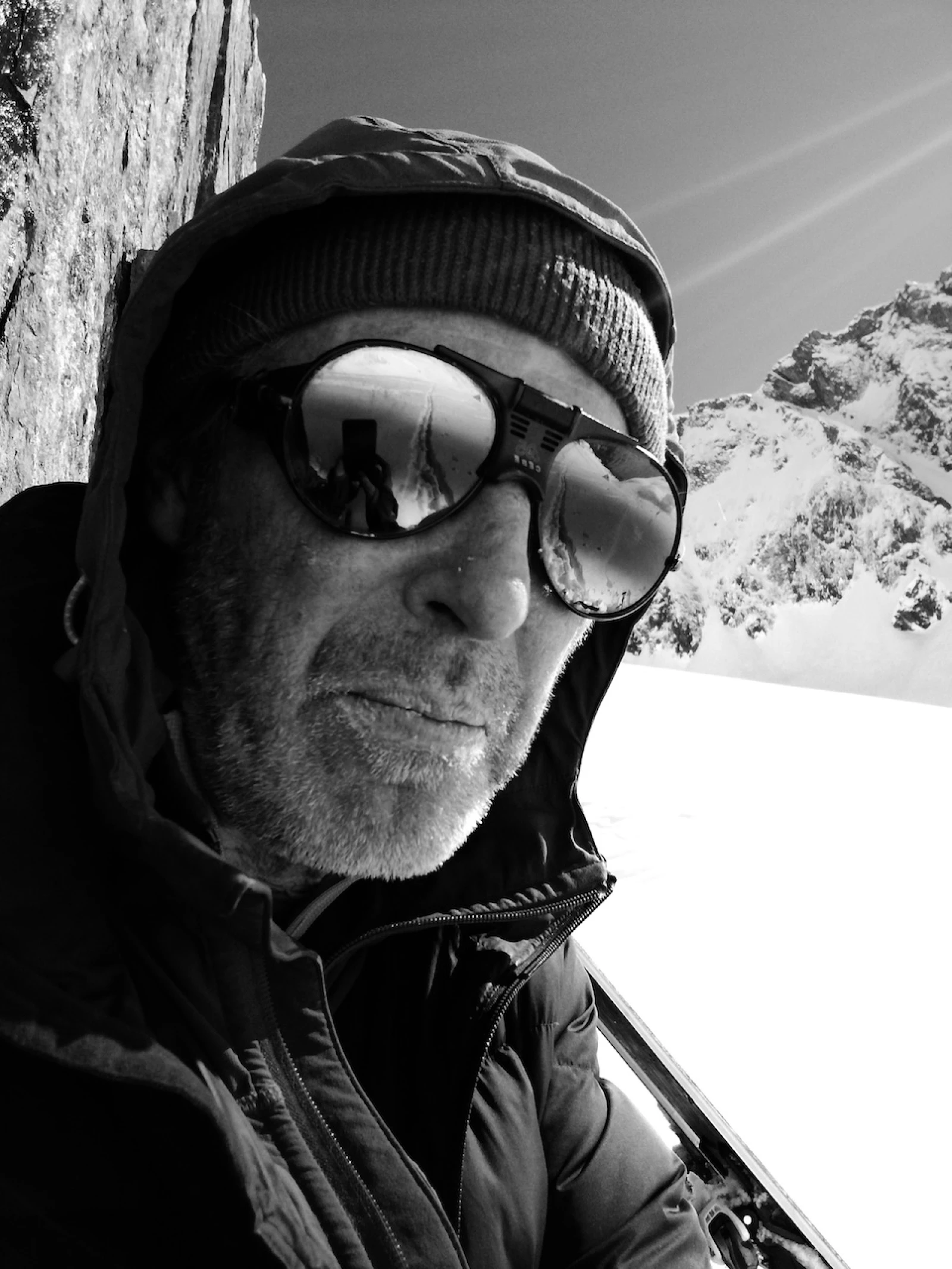
This is a strong, characterful portrait—less concerned with conventional portrait beauty than with presence, environment and endurance. The black-and-white treatment reinforces that choice.
The image has a compelling diagonal structure. The face occupies the central-left portion while the mountain opens out behind the figure on the right. The rock wall on the far left creates a second vertical plane, effectively framing the portrait between rock and mountain.
The strongest compositional decision is probably the very close camera position. The face is large in the frame, and the slight angle makes the portrait feel immediate rather than posed. The mountain then provides scale: the viewer gets both the person and the environment.
The monochrome treatment works exceptionally well here. There is a beautiful range from nearly black shadows in the clothing and hood to the featureless white snow. The face sits between those extremes, giving it substantial dimensionality.
The reflections in the glasses are particularly effective. They introduce another landscape into the portrait and make the glasses function like miniature photographic frames. They also establish how the photographer arrived in the scene, the ski touring tracks receding into the distance.
The expression is restrained and unsentimental. There is no obvious attempt to communicate excitement or triumph. That makes the portrait feel considerably more authentic. The slight downward/sideward orientation of the head, combined with the glasses obscuring the eyes, creates an interesting ambiguity: we see the person very closely, but we don't quite get access to him. That's one of the photograph's strengths. The portrait becomes about physical presence rather than psychological disclosure.
The stubble, knit cap, weatherproof clothing and heavily textured surroundings all contribute to a sense of weather, fatigue, experience and exposure. It feels like a portrait of someone who belongs in this environment rather than someone who has merely arrived there for a photograph.
The relationship between person and landscape is where the photograph becomes more interesting than a straightforward climbing/travel selfie. The mountain isn't merely a scenic background. It establishes a contrast with the face: human vulnerability versus geological permanence. The face is soft, detailed and close; the mountain is distant, enormous and harsh. The rock wall immediately behind the figure makes that contrast even stronger.
The photograph therefore has a quiet narrative: the skier is temporarily embedded in something vastly larger than himself. What makes the photograph successful is that its rejection of I climbed a mountain—look at me. It feels more like This is what I looked like while existing in this place.